



What’s Actually Happening

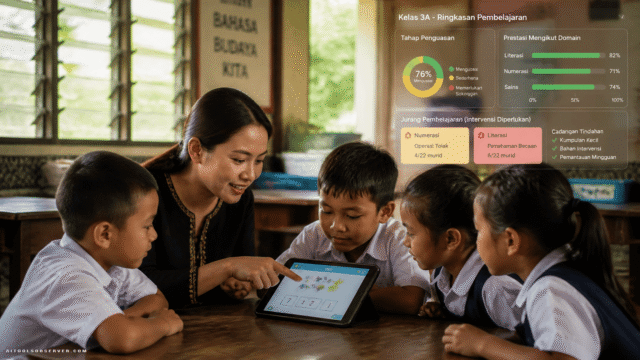
The rollout brings Google’s Gemini for Education into Utah classrooms as a school-managed AI environment. That distinction matters. Students won’t be accessing consumer-grade AI tools on their own terms — they’ll be working within a controlled system that the state and individual schools can oversee.
For teachers, the tools are designed to reduce the administrative load. Building lesson plans, generating classroom materials, and streamlining instructional prep are the primary use cases on the educator side.
For students, the focus is on AI-assisted learning resources paired with a strong emphasis on responsible use.
Student Data Privacy Is the Non-Negotiable

One of the first questions any parent or administrator asks about AI in schools is: what happens to student data?
Utah’s answer is direct. Matthew Winters, an AI education specialist with the Utah State Board of Education, made privacy a centerpiece of the announcement.
“We want to make sure the tools that are available to students have the best safety and security for their data to protect them as students,” Winters said.
Deploying AI through a managed, school-controlled environment rather than open consumer platforms is a deliberate choice. It keeps student data within defined boundaries and gives administrators meaningful oversight — something that’s been largely absent when students use tools like ChatGPT independently.
AI Literacy Goes Deeper Than Chatbots
Here’s where Utah’s approach gets genuinely interesting. The state isn’t just handing students a chatbot and calling it AI education.
Winters was explicit about the broader scope: “We don’t just mean generative AI. That’s our ChatGPTs, our Geminis, those sorts of things. We want to think about things like machine learning, things like applying for jobs or applying for insurance and have machine learning mechanisms.”
That framing is significant. Most AI-in-education conversations stop at generative tools. Utah is pushing further — teaching students to understand the AI systems already shaping their lives as consumers and future job seekers.
“It’s one of those things that’s in the background of a lot of things that we do,” Winters said. “Learning how to have that literacy, that fluency and understanding what it does in our systems, both educationally and as a consumer, is really, really powerful.”
Why This Partnership Matters Beyond Utah
Google landing a statewide K‑12 deal of this scale is a significant market signal. It positions Gemini for Education as a serious enterprise-grade edtech platform — not just a feature add-on to Google Workspace for Education.
For the broader AI tools ecosystem, this move reinforces a few clear trends:
- Managed AI environments are winning in institutional settings. Schools, healthcare systems, and enterprises are choosing controlled deployments over open-access tools. Safety, compliance, and oversight are the deciding factors.
- AI literacy is becoming a curriculum requirement, not an elective. States are starting to treat understanding AI — how it works, where it appears, what it decides — as a foundational skill alongside reading and math.
- Big tech is moving fast on education partnerships. Google, Microsoft, and others are competing aggressively for institutional AI contracts. Utah’s deal with Google is a reference point other states will watch closely.
What This Means for Educators and EdTech Watchers
If you’re a teacher in Utah, the immediate value proposition is time savings — lesson planning and material creation are real pain points that AI handles well when properly integrated.
If you’re tracking the edtech space, this is a case study in how statewide AI adoption actually gets done: through managed platforms, privacy-first architecture, and a curriculum framework that goes beyond surface-level tool use.
And if you’re evaluating AI tools for any institutional context, Utah’s rollout offers a useful benchmark. The questions they asked — Who controls the data? What does literacy actually mean? How do we prepare people for AI they can’t see? — are the right questions for any serious AI deployment.
Utah isn’t just adding AI to classrooms. It’s building a generation that understands AI from the inside out. That’s a different ambition entirely — and one worth watching as other states decide what comes next.


Comments (0) No comments yet
Want to join this discussion? Login or Register.
No comments yet. Be the first to share your thoughts!