


What happened
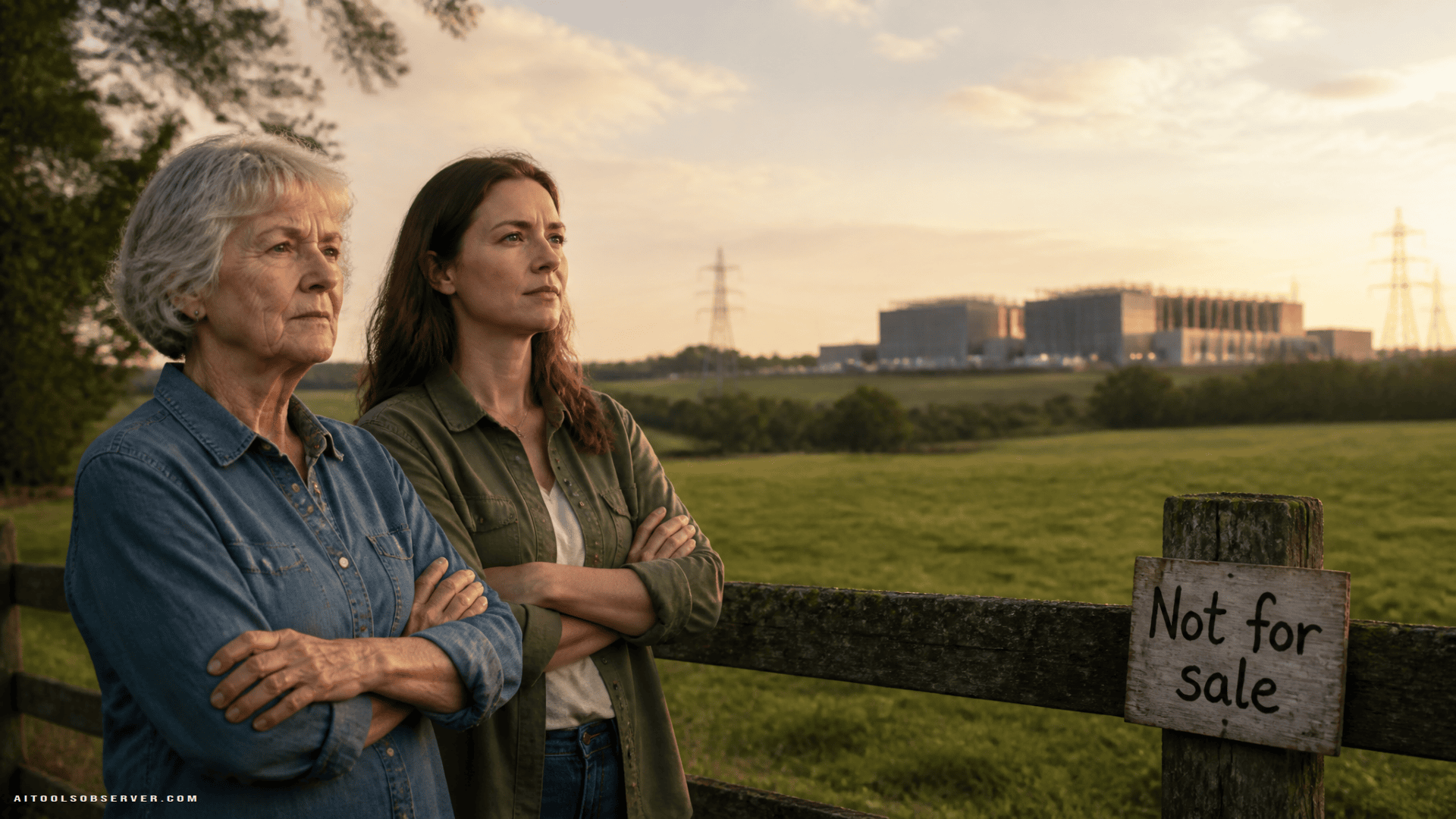
A Kentucky farm owner and her mother were approached about selling family property for a data center development linked to AI infrastructure. The reported offer was enormous by local land standards.
At first, they appeared open to the deal. Then they learned the land would be used for data centers supporting AI systems, and they backed out hard.
The now-viral response: “Kick rocks and don’t come back.”
That line is doing a lot of work. It captures something bigger than one land negotiation: AI infrastructure is no longer an abstract cloud story. It is showing up in fields, on roads, near homes, and inside local politics.
Why this story matters beyond Kentucky
Most people meet AI through chatbots, image tools, or productivity apps. But those products sit on very physical infrastructure.
That means:
- more land deals
- more power demand
- more water and utility questions
- more zoning fights
- more communities asking what they get in return
The Kentucky story puts a very human face on that tension. For one side, a data center can mean jobs, tax revenue, and investment. For the other, it can mean losing a family farm that has held meaning for generations.
Money talks. Heritage sometimes talks louder.
The real conflict: value versus values
This is where AI coverage often gets too tidy. “Economic development” sounds clean until it collides with identity, memory, and land stewardship.
A family farm is not just an asset on a spreadsheet. It can also be:
- a multigenerational home
- a source of local identity
- a symbol of independence
- a line people do not want crossed
That does not automatically make data centers bad. It does mean buyers, developers, and AI-adjacent companies may be underestimating how emotionally charged these transactions can become.
Offering above-market rates solves some problems. It does not solve all of them.
Why AI data centers are becoming flashpoints
AI infrastructure needs somewhere to go, and rural areas often look attractive on paper. Land may be more available. Local officials may welcome investment. Build timelines may look simpler than in dense urban markets.
But “looks simple on paper” is famous last words territory.
Once residents start asking practical questions, the mood can shift fast:
- What happens to farmland?
- Who uses the electricity?
- What changes for neighbors?
- Who benefits first, and who absorbs the disruption?
- Is this a one-time payout or a permanent reshaping of the town?
Those are not anti-tech questions. They are governance questions.
The Maysville angle: local resistance is not fringe anymore
Based on the available context, the proposed development has divided the town. Some residents reportedly see a financial upside and have sold land. Others are pushing back, including through legal challenges.
That split matters.
AI infrastructure debates are increasingly less about whether AI is useful and more about where its costs land. In places like Maysville, that question gets very literal very quickly.
The cloud, as always, turns out to be made of concrete, cables, substations, and somebody else’s backyard.
What this means for companies building AI infrastructure
If you are tracking the AI tools market, this is not a side story. Infrastructure friction can affect the entire stack.
When land acquisition and permitting become contentious, downstream effects can include:
- slower buildouts
- more public scrutiny
- tougher local negotiations
- reputational risk for companies tied to projects
- more pressure to explain community benefits clearly
For AI companies, the lesson is simple: “We’ll pay well” is not a complete strategy.
Community acceptance now looks a lot more like product adoption than old-school real estate buying. People want transparency, trust, and a believable answer to “Why here?”
What founders and AI buyers should pay attention to
This kind of dispute may seem far removed from choosing an AI tool. It isn’t.
Infrastructure constraints can shape:
- service availability
- operating costs
- long-term pricing pressure
- expansion speed
- reliability at scale
If AI demand keeps climbing, the physical layer becomes harder to ignore. The tools may feel digital, but their growth depends on energy, land, permits, and communities willing to host the machinery.
That makes local resistance a market signal, not just a local headline.
The bigger pattern
The Kentucky family’s rejection stands out because it is blunt, memorable, and deeply personal. But the underlying issue is broader: AI expansion is entering places that did not sign up to be symbols in a tech growth story.
And when that happens, not everyone is going to be impressed by the check.
Takeaway
If you want to understand where AI goes next, don’t just watch model releases and chatbot features. Watch substations, zoning meetings, farmland sales, and lawsuits.
That is where the abstract promise of AI meets the very non-abstract question of who has to live next to it.















Comments (0) No comments yet
Want to join this discussion? Login or Register.
No comments yet. Be the first to share your thoughts!