


The Case for Canada Is Surprisingly Concrete
This isn’t just vibes and maple syrup. Canada has genuine structural advantages that make it a credible alternative to increasingly resistant US markets.
- Land: Vast, remote, and far from suburban backyards
- Climate: Cold air is free cooling infrastructure
- Energy: Natural gas reserves, particularly in Alberta
- Political tone: Legislators who are, at least for now, openly enthusiastic
Alberta has leaned into this hard, positioning itself as “North America’s destination of choice” for hyperscale AI infrastructure and offering a concierge service to help investors build at speed. That’s a province actively competing for data center capital.
Alberta Is Doing Most of the Heavy Lifting
Around 90% of Canada’s currently proposed AI data center sites are in Alberta. The province’s natural gas wealth makes it attractive for off-grid projects that don’t stress public electricity grids — a major pain point in the US.
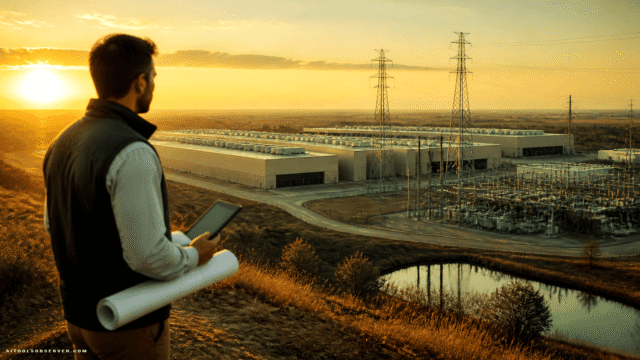
The most visible example is Kevin O’Leary’s Wonder Valley project: a proposed 7,000-acre, 7.5-gigawatt facility in Greenview Municipality, northwestern Alberta. The local reeve called it a “perfect fit” for a community that had been looking for an industrial tenant for 13 years.
Compare that to O’Leary’s parallel Wonder Valley project in Utah, where residents organized fierce opposition and a state senator demanded a 75% scale-down. Same developer, same concept — very different reception.
The Sovereignty Angle Is Real Policy, Not Just Rhetoric
Canada’s federal government has framed AI data center expansion as a matter of national sovereignty and security. The Carney government, focused on reducing US dependency, has projected that Canada needs to expand its computing capacity 16-fold over four years to meet domestic demand.
That framing matters. It gives provincial governments political cover to move fast and gives investors a narrative beyond “we want cheap land and cold air.”
Meta has already committed to a C$13 billion AI data center in Alberta. Anthropic has a proposed facility in Nova Scotia. The big players are treating Canada as a serious destination, not a backup plan.
The Backlash Is Coming — Just Running a Few Months Behind
Here’s where the cautionary tale starts. Canada’s relative calm isn’t evidence of permanent public acceptance. It’s mostly a function of timing and scale.
Sean Mullin, a senior fellow at the University of Toronto and former adviser on Canada’s national AI compute strategy, put it plainly: “AI is generally not very popular. This is both true in Canada and the United States. I think we could experience some of the same backlashes if we’re not thoughtful about it.”
Signs of friction are already visible:
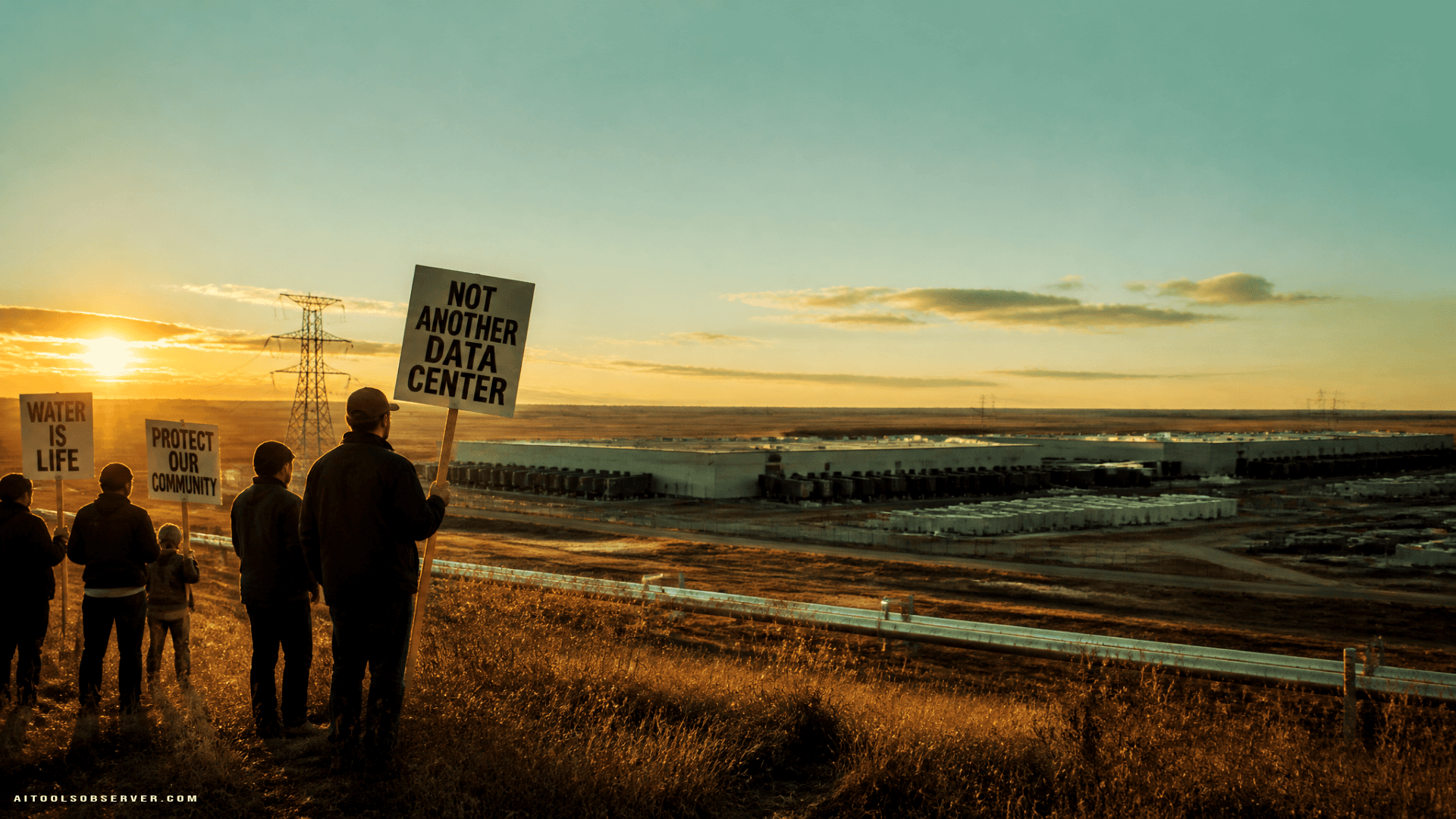
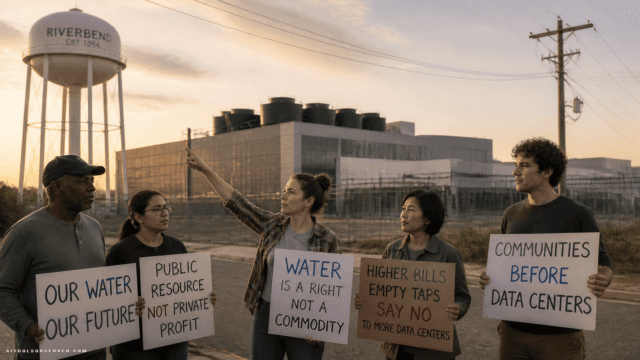
- Hundreds of protesters gathered in Nova Scotia against the Anthropic data center
- Alberta town halls have seen furious residents asking why projects are moving forward without community consent
- Sturgeon Lake Cree Nation has sued the Alberta government over its decision to exempt Wonder Valley from an environmental assessment
- Alberta itself has now proposed legislation restricting where data centers can be built — a reactive move that signals the pressure is building
The water question alone is significant. Wonder Valley’s projected annual water use is roughly six million cubic metres. Local officials argue it’s a small fraction of the nearby river’s flow. Residents aren’t all convinced.
The Gap Between Policy Speed and Public Trust
Canada has released high-level guidance on data center development, co-signed by Anthropic, Meta, and others. It calls for covering electricity costs, minimizing water use, and creating long-term regional benefits. That’s a reasonable framework — but guidance isn’t enforcement.
Bek MacIntosh, an Alberta resident who successfully halted a hyperscale data center in her community after an eight-month fight, isn’t opposed to AI infrastructure in principle. She’s worried Alberta has opened the door to “the most reckless of reckless developers” and that voters could respond with a blunt instrument if provinces don’t self-regulate carefully.
“And I don’t think any political party in Canada is prepared for it,” she said.
That’s the real risk. Not that Canada can’t build AI infrastructure — it clearly can. The risk is that moving fast without community trust creates the exact political backlash that made the US market so difficult in the first place.
What This Means If You’re Watching the AI Tools Ecosystem
For anyone tracking where AI compute capacity is being built — and therefore where AI services will run, scale, and price — Canada is now a meaningful variable.
A few things worth watching:
- Alberta’s regulatory posture will signal whether Canada becomes a genuinely stable infrastructure hub or a short-term arbitrage play
- Public opposition patterns in Nova Scotia and Alberta will indicate whether US-style backlash is replicating itself on a delay
- Sovereignty-driven compute investment could shape which AI services are built and hosted domestically versus relying on US infrastructure
Canada has the ingredients. Whether it has the governance to match is the open question — and the answer will determine whether this is a durable shift or a window that closes faster than the data centers can be built.
















Comments (0) No comments yet
Want to join this discussion? Login or Register.
No comments yet. Be the first to share your thoughts!