


What Actually Changed in Gemini Robotics 2.5
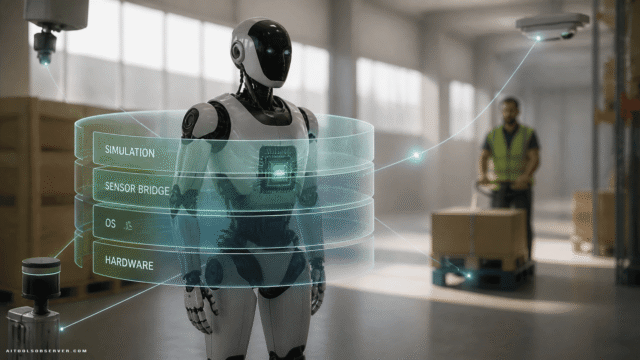
The Gemini Robotics platform sits between user instructions and physical robot movement. The reasoning layer — Gemini Embodied Reasoning — interprets commands and uses live video to plan actions. The action layer — Gemini Robotics, now at version 2.5 — translates that plan into physical movement.
Version 2.5 brings three concrete improvements:
- Higher success rates — 30 to 100 percent better than the previous version across more than 200 evaluated tasks
- Faster execution — 20 to 30 percent speed improvement
- Better dexterity — the model can now handle deformable objects like ribbon, use pipettes, serve food with tongs, and tie a bow with five-fingered hands
That last point matters more than it sounds. Deformable objects are notoriously hard for robots to manipulate because they don’t behave predictably. Progress here suggests the model is getting better at generalizing physical reasoning, not just memorizing task sequences.
The Mercedes-Benz Factory Test
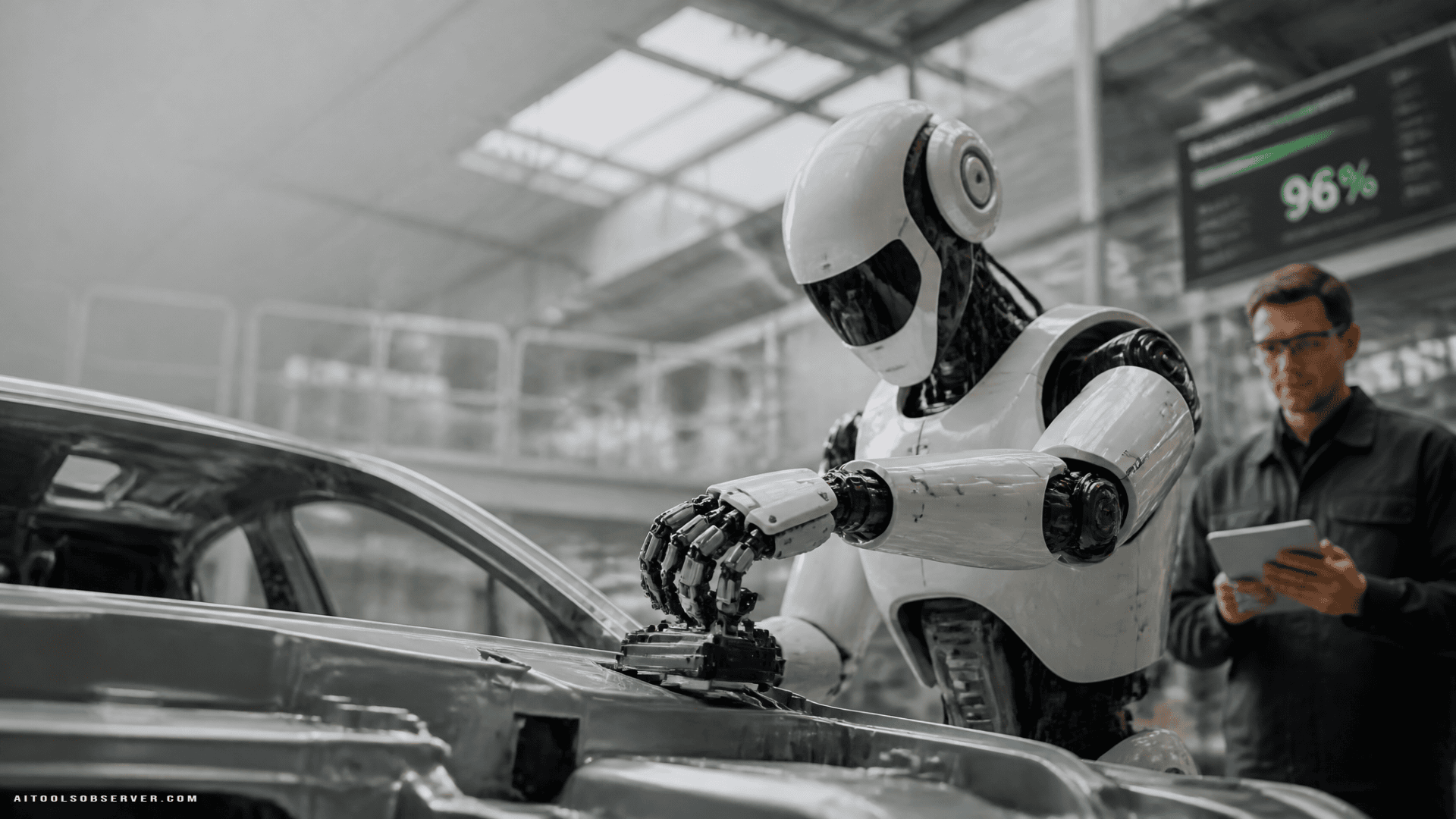
Google partnered with Apptronik and Mercedes-Benz to run Gemini Robotics 2.5 on Apptronik’s Apollo 2 humanoid robot in several European automotive factories. The task: kit automotive parts — a repetitive but precision-dependent job.
The result was a 96% success rate in a real-world industrial setting. That’s a meaningful jump from what previous robotic AI systems have demonstrated outside the lab.
But DeepMind director Kanishka Rao was direct about what that number means: closing the remaining 4% gap will be a “steep road.” A human doing the same repetitive task gets it right virtually every time. For a company like Mercedes-Benz to fully rely on humanoid robots for production, that gap has to close significantly.
The Generalization Trade-Off
This is where the honest tension in the story lives.
Traditional factory robots are manually programmed for a narrow set of tasks — and they execute those tasks with near-perfect reliability. That kind of automation has worked in manufacturing for decades. Gemini Robotics isn’t trying to be that. It’s designed to be a general-purpose robot that can handle almost anything.
DeepMind Robotics head Carolina Parada put it plainly: “We can be very good at a particular application at the cost of generalization. Or we can just push on the generalization axis and maybe not get to 99.9 in every application.”
That’s a real trade-off, not a marketing caveat. General robots are more flexible and potentially more valuable across industries — but they’re harder to get to production-grade reliability on any single task.
How Argon Accelerated Development
Training robotic AI is harder than training text models. There’s no equivalent of “the entire internet” for physical interaction data. The best training data comes from teleoperation, which is slow and expensive to collect at scale.
DeepMind used Gemini 4 Argon — a frontier reasoning model — to build a simulation engine that generated thousands of variations on real-world practice runs using camera data. These digital twins allowed Gemini Robotics 2.5 to generalize faster across new tasks and environments.
Argon was also used to analyze failures and suggest improvements in both simulations and on real robots. That said, this isn’t a real-time feedback loop. Frontier models take time to process, and the current 2.5 release still runs on cloud-based servers — meaning latency remains a real constraint. The demo videos showing robot movement are sped up 2x to appear more fluid.
Safety: A New Open Benchmark
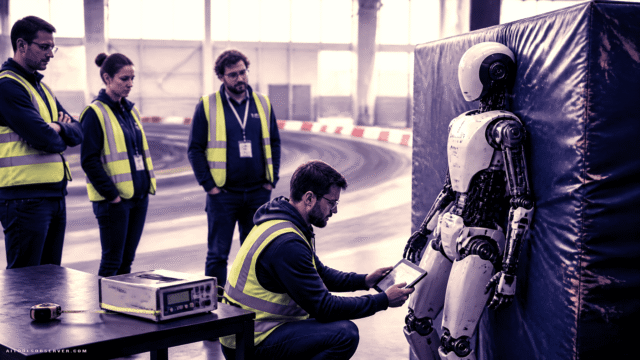
Operating outside a lab means operating near people. DeepMind built inference-time hazard reasoning into Gemini Robotics 2.5 — if something or someone gets in the way, the robot stops or waits.
The numbers here are notable:
- 33% higher task completion when obstacles were present
- 43% higher task completion when people were in the way
Beyond the model itself, DeepMind released ASIMOV-Jailbreak — an open source safety benchmark containing 1,500 adversarial prompts designed to trick a robotic AI into unsafe behavior. The goal is to give the broader embodied AI industry a shared standard for testing physical safety.
With Argon in the loop, Gemini Robotics 2.5 scores 98.8% on this benchmark. Without it, the base model scores 73.5%. The full ASIMOV dataset is available on Hugging Face for anyone working on embodied AI.
Who Has Access Right Now
Gemini Robotics 2.5 is not publicly available. It’s currently in the hands of Google’s robotics partners, including Agile Robots, Apptronik, and Boston Dynamics. Broader availability hasn’t been announced.
What This Means for AI Adopters
If you’re tracking the AI tools ecosystem, the Gemini Robotics 2.5 update is worth watching for a few reasons:
The lab-to-factory gap is narrowing. A 96% success rate in a real Mercedes-Benz factory is a different kind of proof point than a controlled demo. It’s not production-ready at scale, but it’s no longer purely experimental.
Synthetic training data is becoming a serious lever. The use of Argon to generate digital twins and accelerate training is a pattern that will likely show up across more AI development pipelines — not just robotics.
Safety benchmarking is becoming a competitive differentiator. ASIMOV-Jailbreak is an open source contribution, but it also positions DeepMind as a standard-setter in physical AI safety. That matters as regulations around autonomous systems start to take shape.
The honest takeaway: general-purpose humanoid robots are getting meaningfully better, but the gap between “impressive demo” and “reliable production deployment” is still real — and the teams building this technology are saying so themselves.











Comments (0) No comments yet
Want to join this discussion? Login or Register.
No comments yet. Be the first to share your thoughts!