


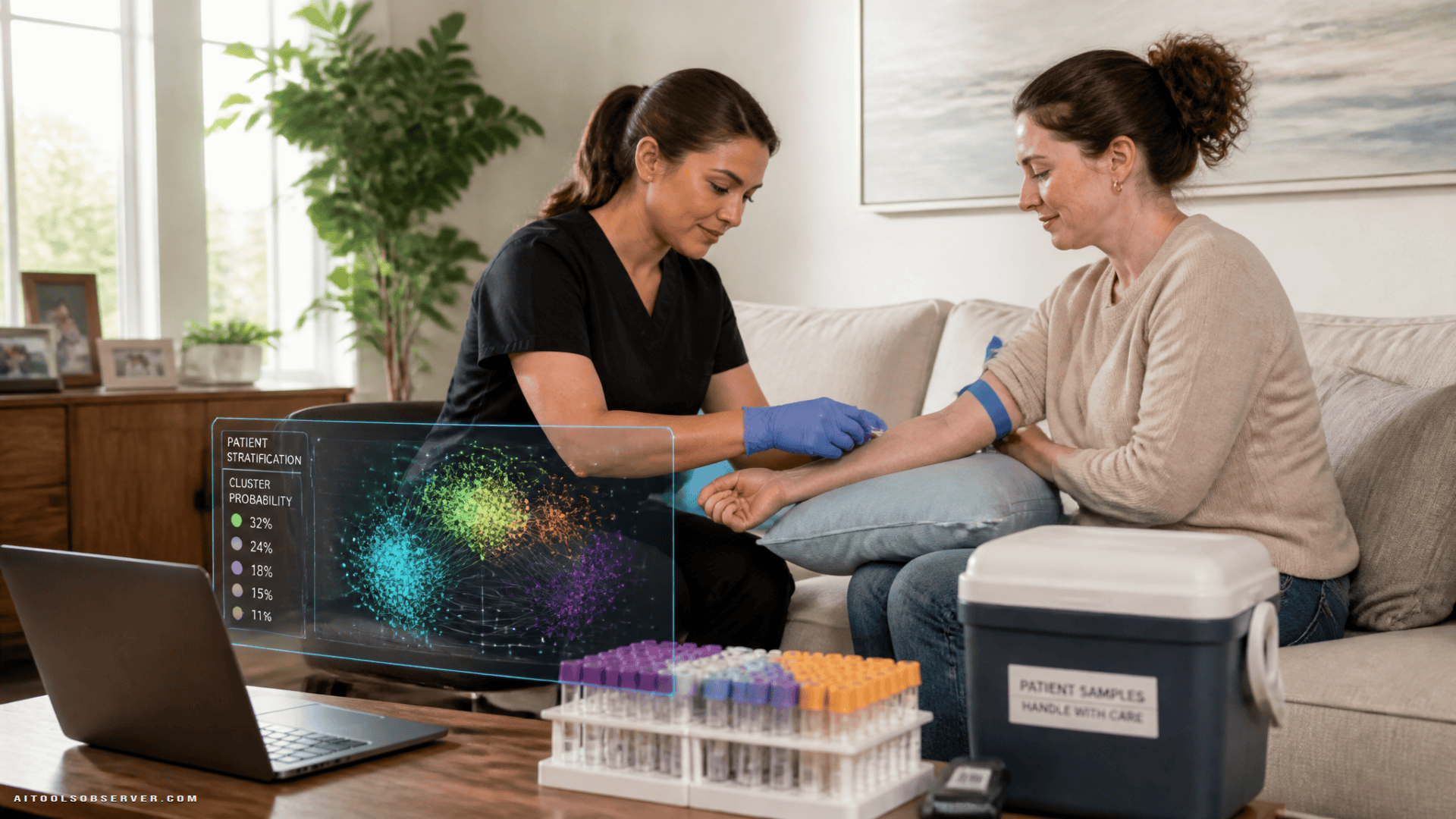
The Problem With “One Diagnosis, One Drug”
When a pharmaceutical company runs a clinical trial for POTS, they typically recruit everyone who fits the diagnostic label. But POTS — Postural Orthostatic Tachycardia Syndrome — isn’t one disease. Based on ChronicleBio’s early findings, it appears to contain at least five distinct sub-diseases, each driven by different underlying biology.
One subgroup’s symptoms may be rooted in immune dysfunction. Another’s may trace back to mitochondrial issues. The symptoms look the same on the surface. The biology underneath is completely different.
When you give a single drug to all five groups, the trial fails — even if the drug works well for one of them. The treatment gets abandoned. Patients lose access to something that might have helped them.
This is the gap ChronicleBio is positioned to close.
Who Is Behind ChronicleBio
The company was founded by Fidji Simo, a former senior executive at OpenAI, Meta, and Instacart, alongside cofounders Rohit Gupta and Rishi Reddy. All three have personal connections to chronic illness — either through their own diagnoses or those of close family members.
Simo herself has lived with POTS for over seven years. After leaving her role as OpenAI’s CEO of AGI deployment, she shifted her focus to ChronicleBio full-time, while continuing to advise OpenAI.
Her motivation isn’t abstract. It’s grounded in direct experience with a medical system that has historically underfunded and misunderstood complex chronic conditions — particularly those that disproportionately affect women.
The Biobank Strategy: 3,500 Vials and Counting
ChronicleBio’s approach starts with biological data — specifically, blood.
In its first year, the company has:
- Conducted 890 blood draws from 709 patients across Utah, Arizona, Texas, and India
- Accumulated over 3,500 tubes of blood in its biobank
- Extracted approximately 153 terabytes of data from those samples
To put that in perspective, that’s roughly three times the data volume GPT-3.5 was trained on.
The reason blood matters here is straightforward. Electronic health records — the data most medical AI models rely on — are noisy and incomplete. They capture symptoms and diagnoses, but they don’t capture how the human body is actually functioning at a biological level. Simo describes this gap as the missing “internet of biology.”
Blood data, analyzed at research grade, gets closer to the underlying mechanisms driving disease.
How AI Fits Into the Workflow
The complexity of multisystem chronic diseases — involving the nervous system, immune system, and genetics simultaneously — made them extremely difficult to analyze before modern AI tools existed.
ChronicleBio uses a combination of OpenAI and Anthropic models to process and interpret this biological data. The goal is to identify patterns across patient subgroups that would be invisible to traditional analysis methods.
What previously would have taken years to analyze — or been computationally impossible — can now be processed in minutes. That speed matters when you’re trying to map biological subtypes to existing drugs and design targeted clinical trials.
The AI isn’t replacing clinical judgment. It’s handling the data complexity that made these diseases so resistant to conventional research approaches, similar to other uses of AI and lab data.
Patient Stratification as the Core Mechanism
The term “patient stratification” describes what ChronicleBio is actually doing: sorting patients into biologically meaningful subgroups before a clinical trial begins.
Here’s why that changes the math on drug development:
- A drug that works for one POTS subtype gets tested on that subtype specifically
- Trial success rates improve because the patient population is more homogeneous
- Failed trials become less likely to bury effective treatments
- Patients get matched to therapies that are more likely to work for their specific biology
ChronicleBio has already identified five sub-diseases within POTS where the underlying biology differs significantly despite similar symptoms. The company plans to begin testing existing drugs on these stratified patient populations before the end of the year, with longer-term plans to partner with biotech and pharma to develop new compounds.
The Home Blood Draw Expansion
One limitation of clinic-based blood collection is access. The patients who are most severely affected by conditions like POTS or chronic fatigue syndrome are often too ill to travel to a clinic.
ChronicleBio’s next phase addresses this directly. The company launched a sign-up process for mobile phlebotomy — trucks that come to patients’ homes to collect blood samples. The kit gets sent to ChronicleBio’s lab, analyzed over a couple of weeks, and patients receive a detailed report on their condition.
Key details on the program:
- Free for the first 250 participants in exchange for contributing their biological data
- $400 at cost after that — the company states it is not marking up the price
- Participants receive longitudinal follow-up as new findings emerge
- Data is returned to patients, giving them actionable information about their own condition
This approach also builds longitudinal data over time. If a patient starts a new drug, ChronicleBio can track whether their immune markers shift — giving researchers a clearer picture of how diseases progress and respond to treatment.
Why This Matters Beyond POTS
POTS is the initial focus, but the underlying methodology applies broadly to any complex chronic condition where symptom-based diagnosis obscures biological heterogeneity.
Chronic fatigue syndrome, long COVID, and similar conditions share the same structural problem: they’re named after what patients feel, not what’s happening in their bodies. That naming convention has made them harder to research, easier to dismiss, and nearly impossible to treat with precision.
ChronicleBio’s bet is that building a large, high-quality biobank — combined with AI-driven analysis — can generate the biological map that’s been missing. Once you know which subtype a patient has, you can match them to a drug that targets the right mechanism.
That’s not a guarantee of cures. But it’s a more rational path toward them than running broad trials on heterogeneous patient populations and hoping for the best, which connects to broader questions about AI in healthcare.
The Practical Takeaway
If you’re tracking AI applications in healthcare, ChronicleBio is a useful case study in what AI in medicine can look like when it’s grounded in specific, tractable problems rather than general promises.
The workflow is concrete: collect high-quality biological data, use AI to find patterns across patient subgroups, stratify patients before trials, and test drugs on the right populations. Each step addresses a known failure point in how chronic disease research currently operates.
For founders and product builders, the broader lesson is the same one that applies across AI use cases: the quality and specificity of your input data determines how useful your AI outputs can be. ChronicleBio isn’t just building models — it’s building the dataset those models need to work.
That’s the part most people skip. It’s also the part that makes the difference.

Comments (0) No comments yet
Want to join this discussion? Login or Register.
No comments yet. Be the first to share your thoughts!